
Description
Michaël Friedman, ND | Senescence and Autophagy in Aging and Chronic Disease
2026 NYANP Annual Conference – Recorded on Saturday, October 3, 2026
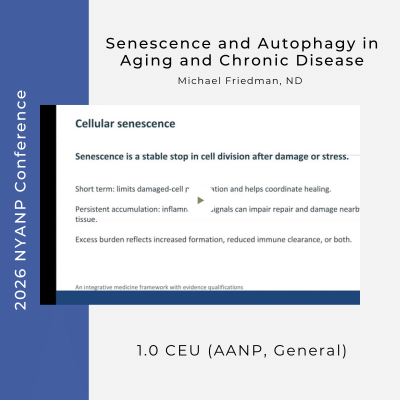
Senescent cells, commonly known as zombie cells, represent an intriguing facet of cellular biology which significantly influence the aging process and age-related ailments. The gradual buildup of senescent cells, coupled with the body’s diminishing ability to efficiently eliminate them, becomes a catalyst for the acceleration of aging and the onset of diverse age-related disorders. To gain a clearer perspective on cellular senescence from a clinically relevant standpoint, one must delve into the intricate link between senescence, inflammation, and chronic disease specifically neurodegenerative diseases.
Targeting the fundamental MOAs of aging, such as senescent cells, impaired autophagy is anticipated to reduce the severity or delay the onset of multiple age associated comorbidities. Senolytic compounds such as fisetin and quercetin and autophagy compounds such as TUDCA will be discussed due to their significant impact on senescent cells, and mitophagy and the potential of delaying the aging process including in neurodegenerative diseases.
We often consider diseases of aging to be inevitable, but by better understanding the pathophysiology of aging, we can develop tools to slow its progression. One important hallmark of aging is cell senescence, a crucial biological process where cells cease to divide and enter a state of permanent growth arrest without undergoing cell death.
Aging is characterized by the accumulation of senescent cells in tissues, which disrupts normal tissue function and promotes SASP secretion resulting in “inflammaging”. This presentation explores the intricate relationship between cell senescence and chronic diseases with inflammation at the root, including cancer, cardiovascular disease, diabetes, neurodegenerative disorders, and pulmonary diseases.
Dr. Friedman will review dietary and physiological triggers of cellular senesce. He will share evidence-based and theoretical senolytic therapies to address cell senescence and slow chronic diseases of aging.
———
Naturopathic physician Dr. Michaël Friedman is the founder of the Association for the Advancement of Restorative Medicine and the Journal of Restorative Medicine. He also creates and formulates herbal and nutritional supplements, and is cofounder and president of the Restorative Formulations supplement company. He is the author of the medical textbook Fundamentals of Naturopathic Endocrinology, a contributing author of Evidence-Based Approach to Restoring Thyroid Health, and co-author of Healing Diabetes. He has treated patients with illnesses ranging from lymphoma to liver cancer, achieving remarkable results that have been published in several medical journals. He lives with his family in Montpelier, Vermont.
PDF of slides also included.
1.0 CEUs (AANP-accredited, General)

